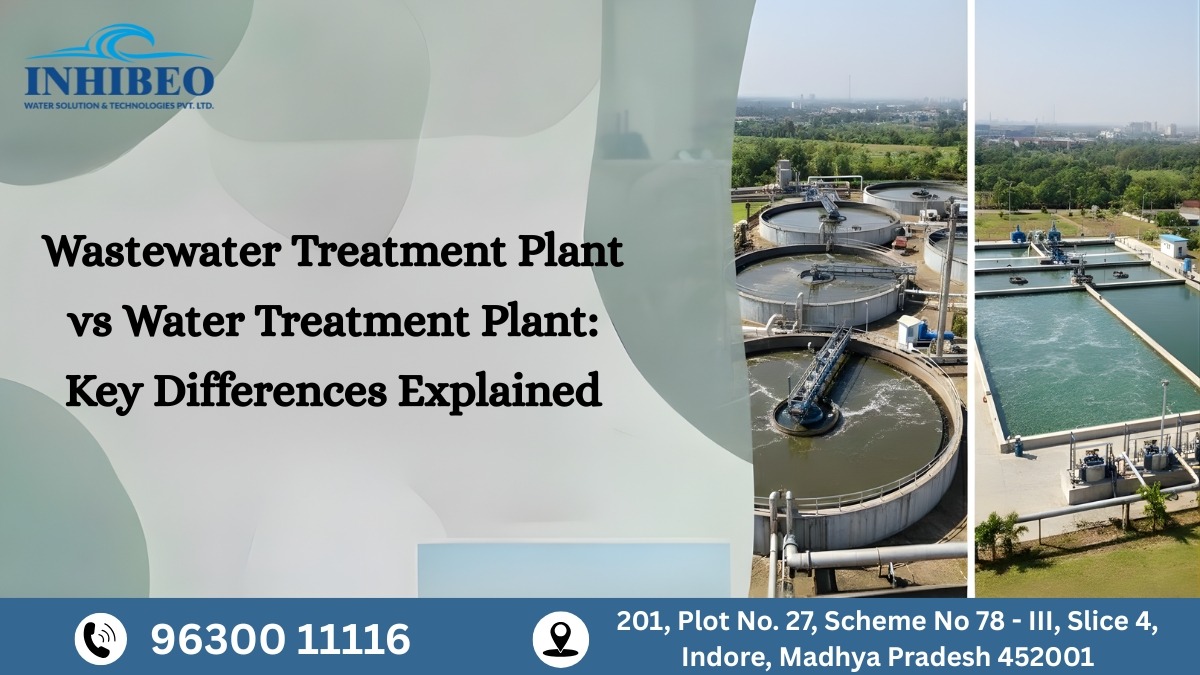
Water management is an essential need for industries, cities, and business facilities. Although Water Treatment Plants (WTPs) and Wastewater Treatment Plants (WWTPs) are concerned with the purification of water, their purpose, construction, and treatment methods differ significantly. The knowledge of these differences assists the organization in selecting the appropriate solution and even in selecting the appropriate wastewater treatment plant manufacturing company or water treatment plant supplier.
What Is a Water Treatment Plant?
A Water Treatment Plant is meant to purify raw water obtained from rivers, lakes, ground water, or reservoirs to enable it to be used in drinking or in industry. The major aim is to eliminate impurities like suspended solids, bacteria, dissolved salts, and other dangerous chemicals in the form of physical, chemical, and biological impurities.
The common methods are filtration, coagulation, disinfection, and occasionally more elaborate methods such as reverse osmosis. Potable water and industrial process water are usually treated in water treatment plants.
What Is a Wastewater Treatment Plant?
A Wastewater treatment Plant is used to treat the domestic, commercial premises and industrial wastewater. This wastewater is rich in organic material, chemicals, oil, and biological pollutants.
The industrial wastewater treatment manufactures a wastewater treatment system that purifies the effluents to the required standard of pollution control before discharge or re-use. The processes involve primary settling, biological treatment, tertiary filtration, and sludge handling in order to mitigate the environmental impact.
Purpose and Applications of Both Treatment Plants
The major concern in water treatment plants is to provide pure and healthy water to either be consumed or used in industries.
Wastewater treatment plants, in their turn, are oriented on treating sewage and effluents in order to protect the environment, meet the regulations, and make the water reusable.
Treatment Process Comparison
The treatment of water usually deals with clarification, filtration, and disinfection. The treatment of Wastewater is more elaborate and extensive, and involves the use of biological processes to dissolve the organic compounds, then advanced treatment processes are used to eliminate the nutrients and pathogens.
Fundamental Dissimilarities Between Water Treatment and Wastewater Treatment Plants
The primary distinction is in the quality of the input water and the treatment goal. Treatment plants of the water are treated by relatively clean raw water, and wastewater treatment plants are treated by highly contaminated sewage or effluent.
Reuse Potential and Environmental Impact
Reuse of treated wastewater can be used in gardening, cooling, flushing, or other industrial processes, and this will lower the demand for fresh water. Wastewater treatment plants play an important role in minimizing environmental pollution.
Which Treatment Plant Is Right for Your Project?
A water treatment plant is needed if you want to provide clean water. In case your project produces sewage or industrial effluent, a wastewater treatment plant is required. The assistance of an experienced wastewater treatment plant manufacturer will aid in the choice of the technology.
Why Select Inhibio Water Solutions & Technologies Pvt. Ltd.
Inhibio Water Solutions & Technologies Pvt. Ltd. is a reputed company as a manufacturer and supplier of water treatment plants. The company provides tailor-made solutions to municipal and industrial use, and is concerned with efficiency, compliance, and sustainability.
Conclusion
A water treatment plant or a wastewater treatment plant is a decision that you need to make based on your source of water, how you are using it, and what your regulations require. The correct choice guarantees compliance, economic effectiveness, and environmental friendliness.
Frequently asked questions
Search based on experience, ability to customize, regulatory compliance, and good after-sales support.
Raw water is treated in water treatment plants, whereas used or contaminated water is treated in wastewater treatment plants.
Yes, to most of the residential, commercial, and industrial projects in accordance with the pollution control norms.